Advanced Equine Endocrinology

ACE: Advanced Continuing Education
October 5-6, 2026
16.00 CE
Medical Credits
Image
Advanced Equine Endo
Registration will open on August 8th
Live Virtual, and On Demand Available

Course Overview

Equine endocrinology is rapidly evolving, with new discoveries shaping how we diagnose and manage diseases. This 2-day ACE course offers an advanced, evidence-based update on endocrine disorders in equids from the neonatal to geriatric periods. Topics include nutrition, pharmacologic therapies, and both emergent and long-term management strategies. Interactive Q&A panels with leading experts will ensure participants leave with practical tools they can apply immediately in clinical practice.

This course was made possible thanks to the generous support of our sponsor, Boehringer Ingelheim.


Back to the Course Catalog

Who Should Attend

  • ACVIM Diplomates and Candidates
  • ACVSMR Diplomates and Candidates
  • ACVS Diplomates and Candidates
  • ECEIM Diplomates and Candidates
Back to top

Agenda

By the end of the course, you will be able to:

  1. Recognize how systemic inflammation alters endocrine function with a focus on septic neonates.
  2. Evaluate the impact of endocrine disorders on reproductive performance in mares and stallions.
  3. Formulate management plans for horses with pituitary pars intermedia dysfunction, integrating medication and nutritional support.
  4. Implement targeted prevention and treatment strategies for hyperinsulinaemia-associated laminitis within Equine Metabolic Syndrome.
  5. Address the unique challenges of diagnosing and managing endocrine disorders in donkeys and mules, with emphasis on glycemic and lipid metabolism.
Back to top

Cost

CategoryPrice
ACVIM Diplomate; European Partner Diplomate$750
ACVIM Candidate; European Partner Resident$375
Nonmember Diplomate$1,010
Nonmember Candidate$505


Back to top

Meet the Instructors

Image
François
François-René Bertin, DVM, MS, FHEA, PhD, DACVIM (LAIM)
COURSE LEADER
Professor
Mississippi State University

Dr. Bertin is a Professor and Director of the Nancy Fair Link Laminitis Research Centre at Mississippi State University. He earned his DVM from the National Veterinary School of Nantes (France), his ACVIM Diplomate status from Purdue University (USA), and his PhD from McGill University (Canada). He has practiced in France, the US, Canada, and Australia. His research focuses on laminitis and associated endocrine disorders, particularly insulin dysregulation and pituitary pars intermedia dysfunction. He has authored numerous peer-reviewed publications, book chapters, and a textbook. He contributes to international guideline panels in equine endocrinology.

Image
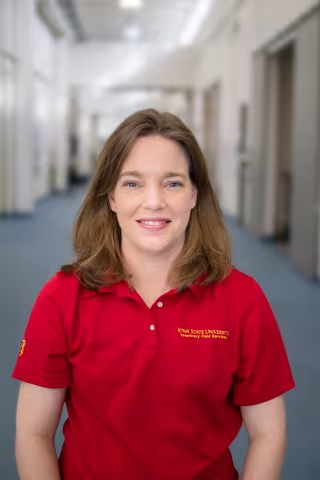
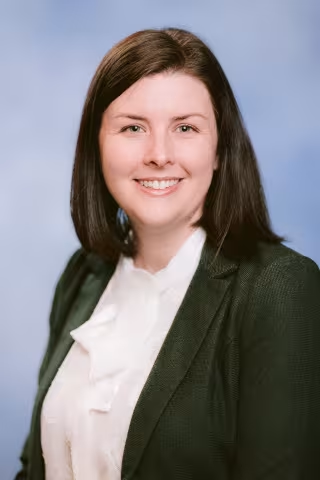
Beachler
Theresa Beachler, DVM, PhD, DACT
Assistant Professor of Theriogenology
Iowa State University

Dr. Beachler is a 2012 graduate of the North Carolina State University College of Veterinary Medicine. After graduation, she stayed at North Carolina State University for a one-year comparative theriogenology internship, three-year comparative theriogenology residency, and graduate training. Currently, Dr. Beachler is a board-certified Theriogenologist, and has been an assistant professor of theriogenology at the Iowa State University College of Veterinary Medicine since 2020. Dr. Beachler has a special interest in routine and advanced reproductive techniques in horses, as well as care of the pregnant mare.

Image
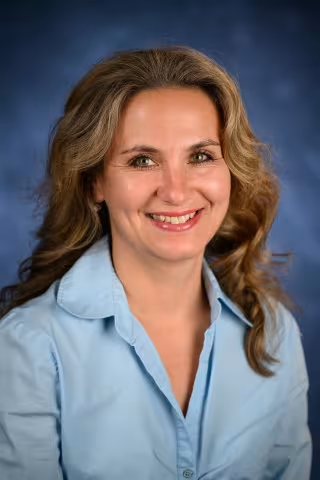
Dembek
Katarzyna Dembek, DVM, PhD, DACVIM (LAIM)
Associate Professor
North Carolina State University

Dr. Dembek earned her Doctor of Veterinary Medicine (DVM) degree from Warsaw University in Poland in 2005. Following this, she completed a one-year equine internship in Ireland, after which she worked in private practice in Saudi Arabia. In 2012, Dr. Dembek finished the Equine Internal Medicine Residency program at The Ohio State University and began her Ph.D. training there the same year. In 2016, she relocated to Iowa, where she served as an assistant professor in Equine Medicine at Iowa State University until joining the equine medicine team at North Carolina State University in 2020.

Image
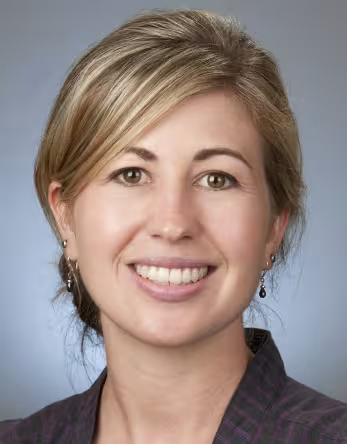
Hart
Kelsey A. Hart, DVM, PhD, DACVIM (LAIM)
Professor
University of Georgia

Dr. Hart is Professor of Large Animal Internal Medicine and Hodgson Chair of Equine Studies at the University of Georgia in Athens, GA.  She received her DVM from Cornell University in 2004. She completed her residency in Large Animal Internal Medicine in 2008 and a PhD in Endocrine Physiology at the UGA College of Veterinary Medicine in 2010, after which she joined the faculty at UGA. Dr. Hart’s clinical interests include large animal endocrinology, neonatology, and neurology, and her research centers on immune-endocrine interactions in and the diagnosis and treatment of equine sepsis and endocrine diseases. 

Image
Hostnik
Laura Hostnik, DVM, MS, DACVIM (LAIM)
Clinical Associate Professor of Equine Medicine
The Ohio State University

Dr. Hostnik graduated from Cornell University College of Veterinary Medicine in 2012. Following graduation, she completed an internship at Rhinebeck Equine from 2012-2013. Dr. Hostnik subsequently joined Ohio State to complete a residency in Large Animal Internal Medicine, which she finished in 2016. After her residency, Dr. Hostnik accepted a faculty position at Ohio State, where she continues to practice equine internal medicine. Her professional interests include endocrinology in adult horses and foals and clinical teaching of residents and house officers.

Image
van Eps, Andrew
Andrew van Eps, BVSc, PhD, DACVIM (LAIM)
Professor
University of Pennsylvania

Dr. van Eps graduated from the University of Queensland School of Veterinary Science, Australia. His PhD studies focused on laminitis, under the mentorship of Professor Chris Pollitt. After training as a large animal internist at the University of Pennsylvania’s New Bolton Center, he returned there in 2017 as the Dean W. Richardson Endowed Chair of Equine Disease Research.  His laboratory focuses on developing strategies for prevention, diagnosis and treatment of laminitis. 

Back to top

CE Credits

This program will be submitted (but not yet approved) for 16.0 hours of live, seminar/lecture continuing education credit in jurisdictions which recognize AAVSB RACE-approval.

For additional questions, please contact us at Learning@ACVIM.org.

Back to top